
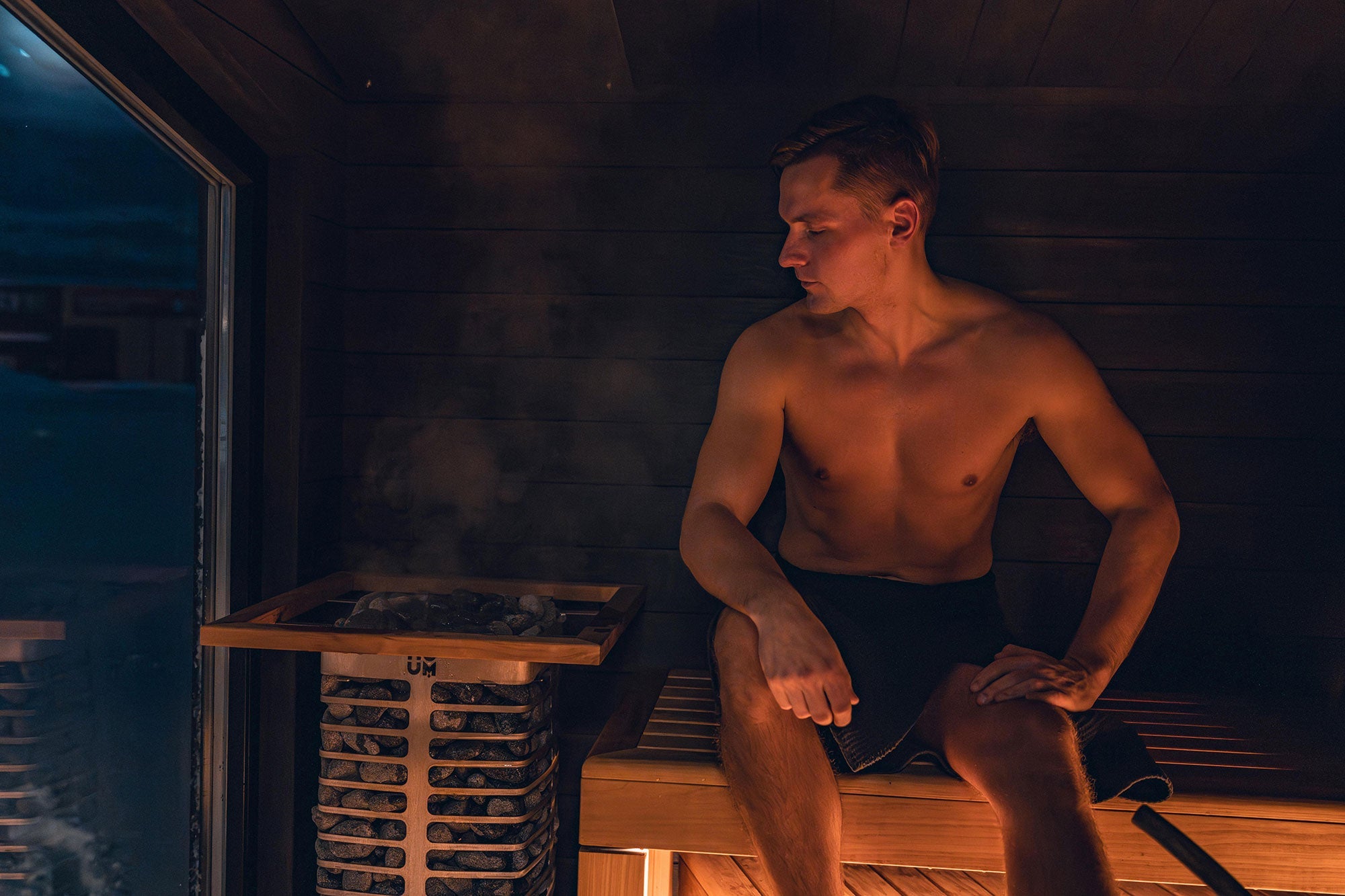
Learn about sauna electrical requirements and how you can keep your sauna safe and functional. Here’s what you need to know as a sauna owner.
A sauna is an exciting upgrade for your home, but to operate it safely, there are certain practical requirements you’ll want to consider. One of the most important is meeting specific electrical guidelines. If you’re considering investing in a sauna or you’re unsure if your sauna is up-to-code, here’s what you need to know.
Sauna Types and Power Needs
The type of sauna you have determines your needed electrical requirements.
For example, an electric sauna, the most common type for most homeowners, requires dedicated electrical circuits.
Infrared saunas have lower power requirements and, in some cases, are plug-in capable. If you’re interested in an infrared sauna, we recommend the HEKLA IR100 Infrared Indoor Sauna w/Carbon & Full-Spectrum Heaters (HEKLA IR100). It’s simple and compact, making it easier to enjoy the health benefits of infrared sauna use without major renovations.
And finally, wood-burning saunas, as you might guess, have minimal electrical needs and typically only require electricity to operate lighting and any optional features you choose.
Keep in mind that the size of your sauna also matters. Larger saunas with larger heaters require a higher electrical load than smaller models.
Canadian Electrical Code
In addition to the basic information about your power needs based on your sauna type, you also need to consider the requirements of the Canadian Electrical Code (CEC). Your sauna must comply with the local governing standard to ensure it’s operating safely and that you are not faced with penalties related to violations of the code.
Additionally, you might have provincial or municipal codes that go above and beyond the CEC. Requirements affect issues such as:
-
Moisture in the environment
-
Proper grounding
-
Use of approved fixtures and wiring
Circuits and Voltage Requirements
Assuming it’s an electric or infrared model, your sauna will require a dedicated circuit to ensure safe and consistent performance. Standard electric sauna heaters typically operate on 120 volts for smaller saunas, up to 240 volts for larger models.
Circuit breaker sizing must match the heater’s wattage to prevent overheating or electrical issues that could put you, your sauna, and everything around it at risk. It’s also important to avoid using a shared circuit because it increases the risk of overload, tripped breakers, and potential safety hazards.
For the most reliable operation and protection of your sauna and your home’s overall electrical system, it’s best to have a dedicated electrical setup for your sauna.
Wiring and Environmental Considerations
Your sauna’s wiring is another important consideration. You’ll need to invest in heat-resistant wiring and ensure it's kept away from high-heat areas.
Moisture also poses a risk, which you can reduce by using appropriate conduit and sealed connections. Whether your sauna is indoors or outdoors will affect how much moisture it’s exposed to, but you’ll want to consider ventilation regardless of its location.
One of our favourite outdoor saunas is the Leisurecraft - CT Tranquility Barrel Sauna (CTC2345N). Built from premium Eastern White Cedar with its signature light finish and tight grain, this sauna fits four to five people at a time.
Control Panels and Safety Features
Control panels and safety features give you peace of mind and reduce the risk associated with your sauna. Your sauna will either have built-in controls or external panels for easier access and temperature management.
You can install a timer to help improve energy efficiency and prevent overheating by limiting session length. An automatic shut-off feature adds another layer of protection if the sauna is left unattended.
Ground fault protection (GFCI), where required, helps reduce electrical risk, and using CSA-certified components ensures the system meets Canadian safety standards.
Should You Hire an Electrician?
The simplest answer to this question is “Better safe than sorry.”
Obviously, working with an electrician increases the initial installation cost, but if it prevents a problem down the road related to an electrical issue, it could save you big. If you’re on the fence about whether an electrician is worth the cost, know that working with a professional ensures:
-
Compliance with Canadian and local codes
-
Proper load calculations
-
Safe installation
-
Management of licensing and permits
Getting the Most Out of Your Sauna Installation
Avoiding common mistakes is essential if you want to enjoy your sauna safely and ensure that it operates for as many years as possible. Careful planning and adherence to Canadian electrical standards help prevent these problems. Working with a licensed professional ensures your installation is safe, efficient, and built to last, giving you confidence that your sauna will perform reliably for years to come.
If you have questions about sauna installation or electrical requirements, we can help. Contact Pool Products Canada to discuss your needs.
